How Anda drives financial dignity in Angola with EVs & data
Transforming Angola's informal transport with Google Cloud
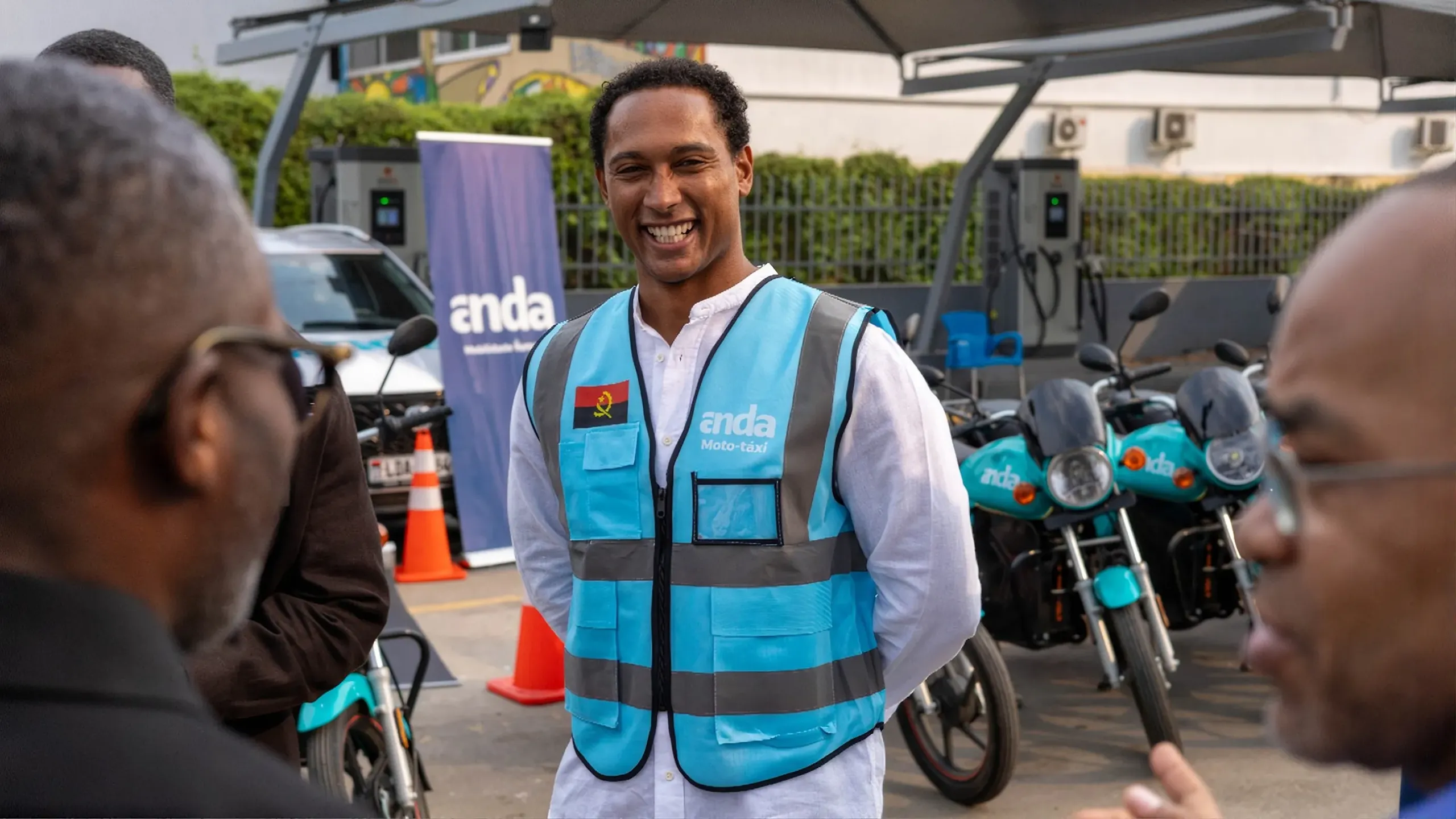
In Luanda, Angola, where nearly 78% of the active population works in the informal economy, urban mobility is driven by more than 1.2 million motorcycle taxi drivers. Despite serving as the social engine of the capital, 95% of these drivers do not own their vehicles, remaining trapped in predatory daily informal rentals with no access to bank accounts, insurance, or formal credit. Founded in 2022 under the leadership of cofounder and CEO Sergio Tati, Anda was born to dismantle this restrictive system through a drive-to-own model that combines electric motorcycles, IoT telemetry, and data-backed microfinancing. By replacing predatory rentals with an asset-ownership pathway, Anda provides essential workers with professional training, digital payments, and a route to financial inclusion. For CEO Sergio Tati, the transformation goes far beyond market metrics: "What strikes you first about Luanda is the sheer number of motorcycle taxi drivers, mostly young men doing everything they can to feed their families. They are entrepreneurs and a key part of the social fabric that keeps Luanda moving. For us, every asset is an opportunity for a driver to go from being marginalized to becoming a professional service provider who is respected."
Anda joined the Google for Startups Accelerator program to strengthen its organizational execution capacity and solve a critical telemetry bottleneck. The program served as a masterclass in building a sustainable enterprise, enabling leadership to scale its team from 50 to over 170 employees during its participation. Through dedicated mentorship sessions and Google’s OKR framework, the founders transitioned from managing daily tasks to driving long-term organizational strategy and servant leadership. Reflecting on the transformative impact of the mentorship received, Sergio Tati highlights a core mindset shift: "One phrase above all the others stayed with me from the mentors: 'Treat people like volunteers.' I spend more than 70% of my time on vision, strategy, and the people needed to turn those into reality, ensuring my team has everything they need to do the most meaningful work of their lives."
Anda faced a major technical bottleneck: monitoring a large fleet of GPS-tracked vehicles through vendor silos that offered no real-time visibility or integration with core business logic. Working with Google Cloud throughout the program, CTO Sara Noureldin re-architected the company's telemetry infrastructure by building a real-time ingestion pipeline using Google Cloud Pub/Sub and Dataflow. Geolocation streams are now landed directly into Google BigQuery, unifying operations, finance, and customer success onto a live fleet dashboard, while feeding Gemini platform models for behavioral credit scoring and risk analysis for unbanked drivers. As Sara Noureldin explains: "The turning point came when we moved from a fleet management mindset to a data platform mindset. We built a proper ingestion pipeline on Google Cloud using Pub/Sub and Dataflow to process telemetry into BigQuery, turning a simple device monitoring tool into a live, queryable dataset we can build on.”
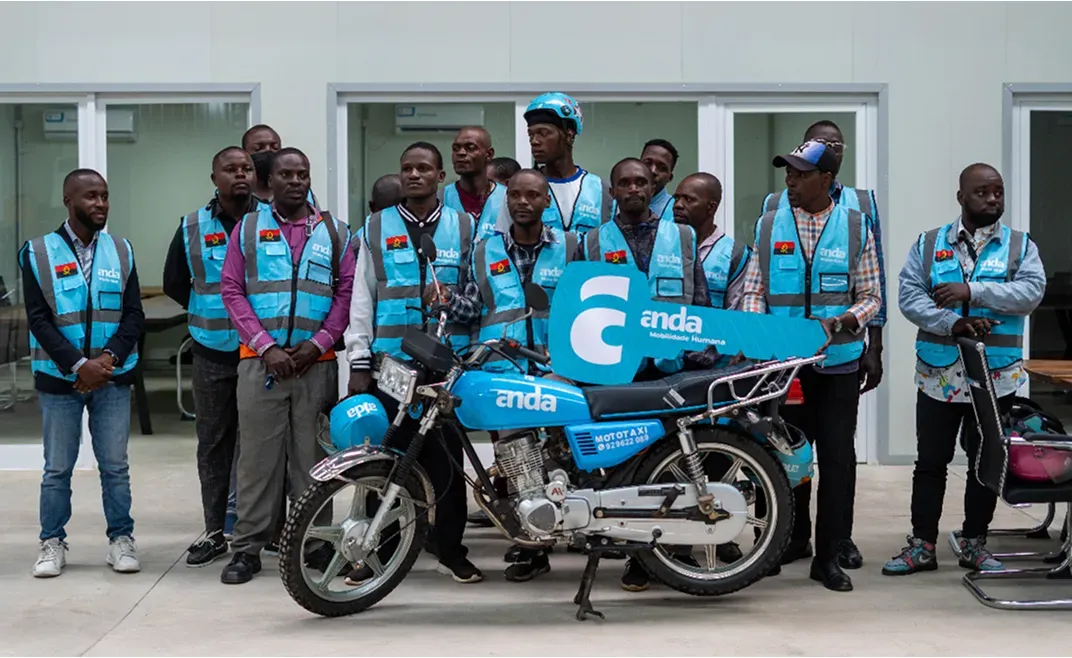
The operational stability and real-time visibility unlocked by Google Cloud provided Anda with the structural foundation needed to de-risk geographic expansion. By building on this reliable platform to serve over 1,200 active users, Anda is scaling its footprint as it closes its pre-Series A round—building on the $4.3 million in 2026. By proving that electric vehicle transition delivers lower operating costs for drivers and higher take-home pay, Anda is building a scalable, sustainable model for urban transit across Sub-Saharan Africa. Looking ahead to long-term impact, Sergio Tati concludes: "Anda is a social enterprise focused on human mobility in every sense—physical, professional, social, and economic. We build infrastructure meant to last a decade rather than a quarter, because when you are trying to change the direction of a country and a continent, you think in ten and twenty-year increments.”

Secure, scalable cloud computing and infrastructure services for modern application development.

Scalable, reliable messaging service to stream real-time event data into Google Cloud.

Serverless, scalable streaming and batch data processing service based on Apache Beam.

Serverless, AI-ready enterprise data warehouse that helps manage and analyze data at scale.

Secure, durable, and highly scalable object storage service for any type of data.

Enterprise platform to build, ground, and deploy generative AI agents across business workflows.